


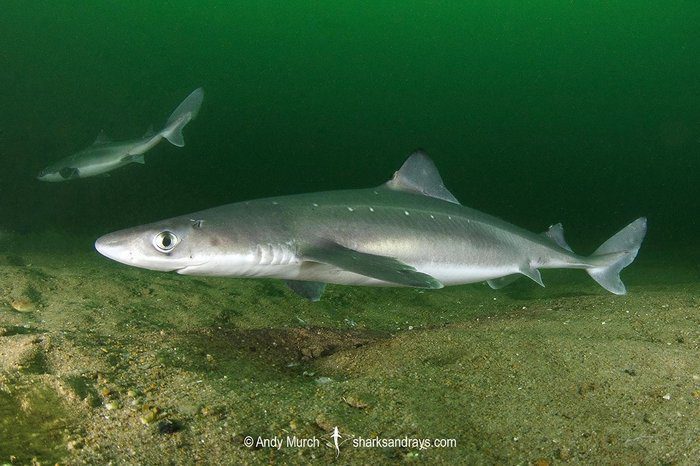
Many might not recognize the name, “kokkalaris”. In scientific terms, it’s called acanthis (squalus acanthias) and is one of the top hundred species in Cypriot seas. Even though it’s vital to the marine ecosystem, it’s still one of the most “misunderstood” fish around.
Where can we find it and what are its main characteristics?
According to the Department of Fisheries and Marine Research, the kokkalaris is among the most successful shark species worldwide. You can find it in many seas and in large numbers. This small benthopelagic dogfish often swims in the coastal waters of Cyprus.
It usually lives at depths of 5 – 150 meters, but some have been spotted deeper than a thousand meters. The kokkalaris can also handle brackish water. Its body typically measures 50 – 110 centimeters long and weighs 1 – 3 kilograms, but some can reach up to 9 kilograms and grow longer than 150 centimeters.
The kokkalaris, or acanthis, is a social fish. It often forms groups based on gender and size. Sometimes, larger schools appear with males and females of different sizes swimming together.
What does the kokkalaris eat?
The kokkalaris has a varied diet like most sharks. But since it’s small, it mainly eats small bony fish, crustaceans, gastropods, cephalopods, and jellyfish.
Is it a dangerous fish for humans?
Even though it’s a shark, it’s not considered dangerous to humans. However, its spines and flexible body can be risky if caught alive in nets or on hooks.
Gestation and reproduction
The kokkalaris breeds in winter. Gestation lasts about 22 months, with females keeping the eggs inside their bodies. Each female can give birth to between 1 and 20 young through ovoviviparity. Newborns are said to be self-sufficient and independent from day one.
This fish is often thrown back during fishing because of its small size and two dorsal spines. Still, the kokkalaris is a tasty species that plays an important role in marine ecosystems. When used properly, it makes for a quality and “tasty” choice for people.
Photo: sharksandrays.com – Andy Murch
