


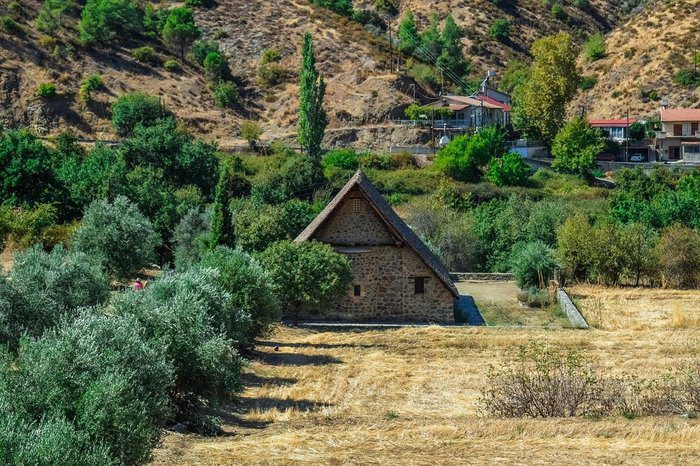
In the heart of the Troodos mountains, where nature meets history, are some of the most important examples of Byzantine art in Cyprus. These painted churches in Troodos are priceless monuments that showcase rare Byzantine and post-Byzantine art from the 11th to the 19th century.
Ten of these churches are recognized worldwide and are on the UNESCO World Heritage List.
One standout is the church of Panagia Podithou, also called Podithou. It sits at the northern edge of the Solea Valley, in a beautiful part of central Troodos. The church is nestled in the narrow, fertile valley of the Klariou River, also known as Karkotis, just a short distance north of Galata. It is a key part of the area’s natural and cultural landscape.
Since 1985, Panagia Podithou has been officially listed as a UNESCO World Heritage Site, highlighting its lasting importance for our island’s history, art, and identity.
This monument is the katholikon of a small monastery founded in 1502 by Demetrios de Coron and his wife Helen. The monastery operated until the early 19th century but was abandoned after 1821. In the mid-19th century, it became Galata’s first primary school.
The church is a single-aisle building with a wooden roof and a rectangular shape, featuring a portico added later on three sides. The simple painted decorations remain in some areas, along with later frescoes from the 17th century showing Apostles Peter and Paul.
Today, Panagia Podithou stands as a quiet witness to the area’s historical and spiritual journey. It is a valuable part of local heritage, reminding us of the strong bond between the community and Cyprus’s history and faith.
