


Every year, as the air cools and hints at winter, many of us plan little getaways. These trips help us relax, recharge, and enjoy nature.
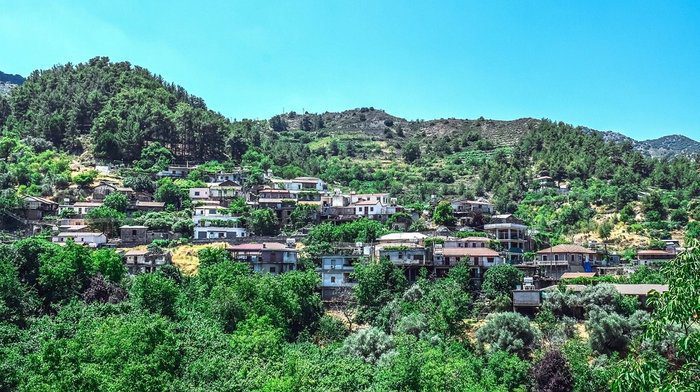
In the lush hills of mountainous Cyprus, Platanistasa in Nicosia District shines as a hidden gem. It’s a perfect spot for family time and wandering through the village’s trails and charming alleys.
How do you find the village and where is it located?
This is a small village in Pitsilia, about 58 kilometers from Nicosia via the Nicosia–Peristerona–Orounta–Kato Moni–Gefyri Panagias road, or 40 kilometers if you take the Nicosia–Anthoupolis–Agrokipia–Gefyri Panagias road.
Platanistasa sits at around 940 meters above sea level in a rugged area. Narrow valleys and steep peaks over 1000 meters create a stunning landscape shaped by the Serrache River, a tributary of Peristerona, offering amazing views to visitors.
The three versions of Platanistasa’s name
Old maps show Platanistasa as either “Platanista” or “Piatanista,” with three theories about its name origin.
The first version sees the name as plant-related, linked to the plane tree. So, Platanistasa means a place filled with plane trees.
The second version suggests that the name comes from “Palace,” referring to the country mansion of Frankish nobles and the Royal family in today’s village center, known as “Vasilias.” Hence, Platanistasa means “village around the Palace”, changing from Palatistasa to Platanistasa.
The third version connects the name to the horseshoe shape of the village, resembling a platana. Interestingly, platana was also a horseshoe-shaped metal used on local shoes called “tsangkaropodina,” worn by past residents of Pitsilia.
Visiting a community is more than just being there; it’s about knowing its history, understanding its roots, and valuing what its name represents.
